This Tamil–Telugu bilingual thriller, starring Naveen Chandra and directed by Lokesh AJJLS, hopes to grab viewers by hooking them with a chilling serial-killer premise and psychological nuance. It’s tense and stylistically photographed at times, yet a slow, plodding pace and predictable twists keep it from becoming a genre leader.
The film begins in eerie blackness—a ominous shot of a car stalling on a desolate road as a masked figure approaches a charred dead body, drenches it in petrol, and sets it ablaze—introducing us to a thriller based on fear and mystery. We are introduced to ACP Aravind (Naveen Chandra) from the start as a sharp-thinking police officer well-versed in solving high-risk crimes. His calm and systematic personality shifts to fierce resolve as a specific case of burnt dead bodies involving a haunting trend of twins falls into his lap.
It is held together by a satisfactory performance by Naveen Chandra—his intensity and control as Aravind, a guilt-tormented and professionally repressed cop are persuasive. Abhirami, Reyaa Hari, Dileepan, Riythvika, and Aadukalam Naren perform their roles genuinely, though some of these characters are one dimensional. Especially remarkable is Abhirami in providing emotional punch in key flashbacks that disclose the motivations of the murderer.
The rhythm and scenario of film are a hit-or-miss experience. It’s marred by a slow procedural pace during part one—scant clues, minimal red herring moments, and a tedious though unremarkable investigation. This conscious setup damages the suspense, which percolates only in the concluding act with smarter manipulations and a surprising denouement. Though the ending doesn’t tie everything in a bow, as admirable as that is for not bow-tying everything, the build-up of tension is spotty.
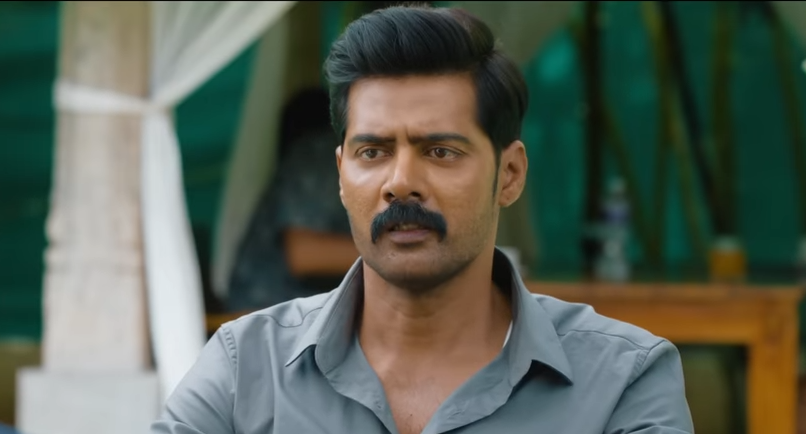
On a technical level, cinematographer Karthik Ashokan succeeds in creating a moody, tense atmosphere—night-shot sequences and eerie shots boost thriller montages. Background scoring by composer D. Imman increases tension throughout, though at times not organically linked to moments involving characters. Editing largely adheres to story pace, except for a romantic subplot that slows momentum.
The other asset of the film is its macabre subject of twins manipulated into fratricide—a new and startling twist that gives a chilling aura to the murders. A few others also note the self-contained, open-ended conclusion: it doesn’t wrap everything into a bow and instead gives a haunting aftertaste. On OTT, the film is still making its presence felt, and viewers are enjoying it for its “gripping storyline and thrilling score.” Even its director Karthik Subbaraj praised Naveen Chandra’s performance, marking its rising popularity.
Nonetheless, Eleven is imperfect. While having a brilliant premise itself, it stumbles into generic story cliches—lacking good misdirection during its early phases and outing its possibly good hidden killer early on. Its roughly 135-minute run could have been shorter; some parts do test viewers’ patience. In addition, a litany of secondary characters, especially on its love story, are redundant and underdeveloped.
Though imperfect, Eleven stands out through its boldness, emotional commitment, and commendable lead work. It’s no ideal thriller, but a transporting watch, and especially so in its stylish visuals and terrifying score. Psychological crime-drama fans will find much to like—namely, a twin-based premise and a chilling final twist.
Verdict
Eleven is a tense crime thriller with rock-solid technical construction and a terrifying premise, headlined by Naveen Chandra’s powerful performance. It stumbles on its ponderous pace and underdeveloped characters, but owing to its intricate mystery and emotional nuances—combined with its inconclusive ending—it’s time well invested if you appreciate cerebral and mood-intensive crime films.